
Share this article
Money and Banking in the UK: A Practical Guide for Saffas
Moving to the UK involves more than just a visa. Learn how to set up your banking, build a credit history from scratch, and manage your money like a local.
Key Takeaways
- ✓ Open a digital bank account first for speed, then a high-street bank for long-term needs.
- ✓ Your South African credit history does not transfer; you must start building it from day one.
- ✓ Use specialist transfer services instead of bank-to-bank transfers to save on exchange rates.
- ✓ Register on the electoral roll if eligible to help boost your credit score.
Landing in the UK is an exciting milestone, but the administrative reality of setting up your financial life can feel overwhelming. Unlike back home, where your financial history is well-established, arriving in the UK means starting your credit profile from a blank slate.
This guide breaks down the essential steps to getting your money sorted, from choosing the right bank to understanding how to build a solid financial foundation in your new home.
Choosing Your First Bank
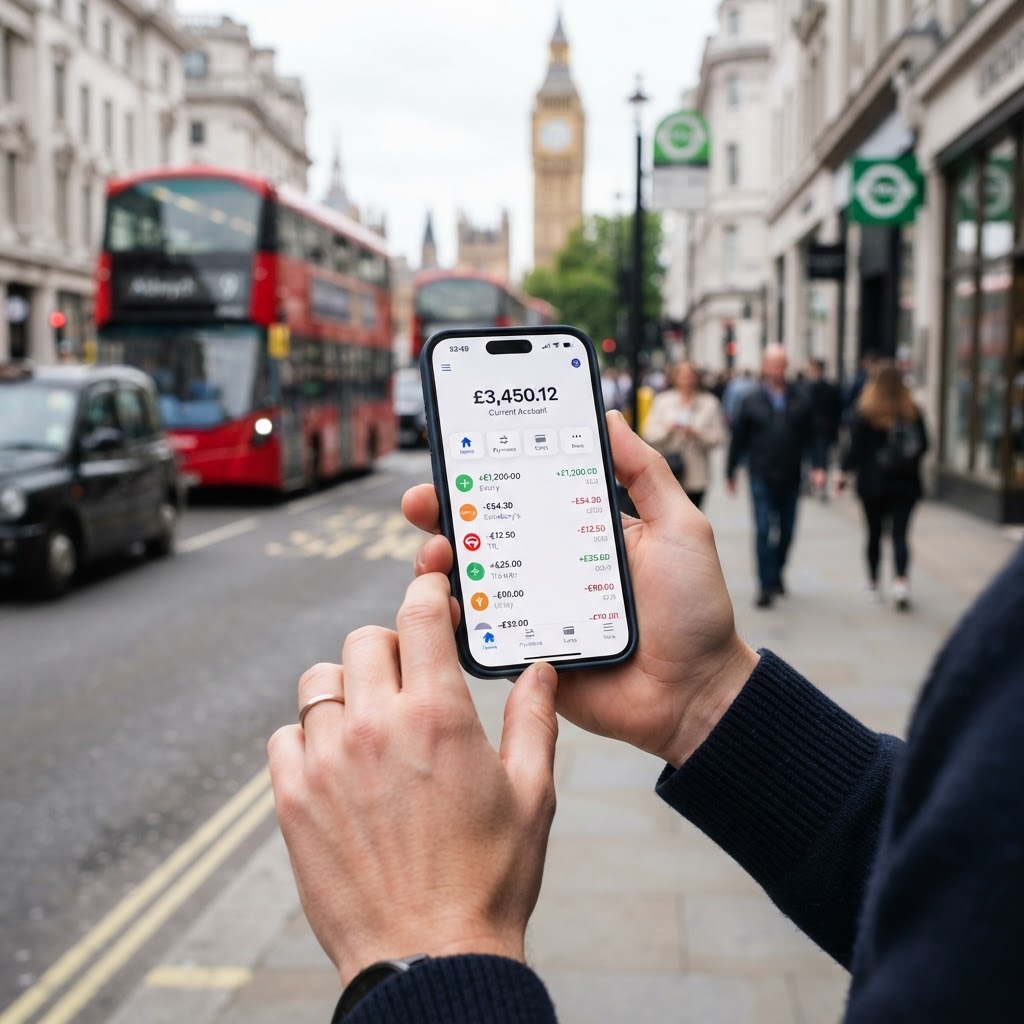
You have two main paths: traditional high-street banks or digital-only banks. High-street banks like HSBC, Barclays, Lloyds, and NatWest are excellent for long-term needs, such as mortgages or personal loans. However, they often require a UK proof-of-address, which can be tricky when you first arrive.
Digital banks like Monzo, Starling, and Revolut are often the fastest route for newcomers. They typically have simpler onboarding processes and allow you to open an account via an app using your passport and visa. Many Saffas find it easiest to open a digital account immediately upon arrival to receive their salary, then open a traditional account once they have a tenancy agreement or utility bill in their name.
Building Your UK Credit Score

Your South African credit history does not follow you to the UK. To build a score, you need to demonstrate responsible borrowing. Start by getting a basic credit card or a 'credit builder' card. Use it for small, everyday purchases and ensure you pay the balance in full every month.
- Register on the electoral roll if you are a Commonwealth citizen, as this is a major factor in credit scoring.
- Keep your address consistent across all financial accounts.
- Avoid applying for multiple credit products in a short period, as each 'hard search' can temporarily lower your score.
Remember that building a score takes time. Be patient and consistent with your payments, and you will see your rating improve over the coming months.
Sending Money Home
When moving money between South Africa and the UK, avoid using standard bank-to-bank transfers. These often come with poor exchange rates and high hidden fees that can cost you thousands of rands. Instead, use dedicated international transfer services like Wise, OFX, or CurrencyFair. These platforms typically offer rates much closer to the mid-market rate.
If you are moving large sums, such as proceeds from a property sale or retirement fund withdrawals, always compare quotes from multiple providers. Check if they offer a 'forward contract' if you need to lock in a rate for a future date. Always ensure the service is FCA-regulated in the UK to keep your funds secure.
Managing Your SA Accounts
You can keep your South African bank accounts after moving, but be aware of the South African Reserve Bank's exchange control regulations. If you have completed the tax emigration process through SARS, your local accounts will be converted to non-resident accounts. Any interest earned on these accounts is generally taxable in the UK, though you may be able to claim relief under the UK-South Africa double taxation treaty. It is wise to consult with a tax professional who understands both jurisdictions to ensure you remain compliant with HMRC and SARS.
Pro Tips
Use Contactless Payments
Contactless payment via card or phone is standard for almost all transactions in the UK. You can pay for items up to £100 without needing a PIN, making daily life much faster.
Check Your Credit Report
Use free services like ClearScore or Experian to monitor your UK credit report. Checking it regularly helps you spot errors and understand what factors are influencing your score.
Keep Documentation Organised
Keep digital and physical copies of your tenancy agreement, employment contract, and utility bills. You will need these repeatedly to prove your address for banking and other services.
Frequently Asked Questions
Can I open a UK bank account before I arrive?
Some international banks like HSBC offer accounts that can be opened pre-departure for certain clients. However, most newcomers find it easier to open a digital account once they have a UK phone number and address.
Does my South African credit score count in the UK?
No, your South African credit history does not transfer to the UK. You start with a blank credit file and must build your score from scratch by using credit responsibly.
What is the best way to transfer money from SA to the UK?
Use specialist currency transfer services like Wise or OFX rather than traditional banks. They offer better exchange rates and lower fees for international transfers.
Do I need to tell SARS I am moving?
If you are leaving South Africa permanently, you should look into the tax emigration process through SARS. This changes your tax status and affects how your local bank accounts are managed.
Free email · no account needed
More like this, straight to your inbox
Stories, guides and what's on for South Africans in the UK — plus every Boks, Proteas and Bafana fixture with the UK channel. Free.
Email only, unsubscribe any time. Privacy notice
Analytics
We'd like to use Google Analytics to count visits and see which pages get read. It stores an ID on your device. Say no and the site works exactly the same — nothing here affects signing in, the match-day poll or the newsletter, which don't need your permission because they only do what you asked for.
You can change this any time on our cookies and storage page.
Have your say
No account needed — say your bit and post. Disagreement welcome; abuse gets removed.
Nobody has said anything yet. Go on.