Share this article
Mastering the Potjie: A Saffa’s Guide to UK Cast-Iron Cooking
Bring a taste of home to the UK. Learn how to choose, season, and cook a perfect potjie, regardless of the unpredictable British weather.
Key Takeaways
- ✓ Choose a three-legged cast-iron pot for authentic heat distribution.
- ✓ Season your pot before first use to build a protective, non-stick patina.
- ✓ Layer ingredients carefully and avoid stirring to maintain texture.
- ✓ Use a heavy-based pot on the stove if the British weather turns sour.
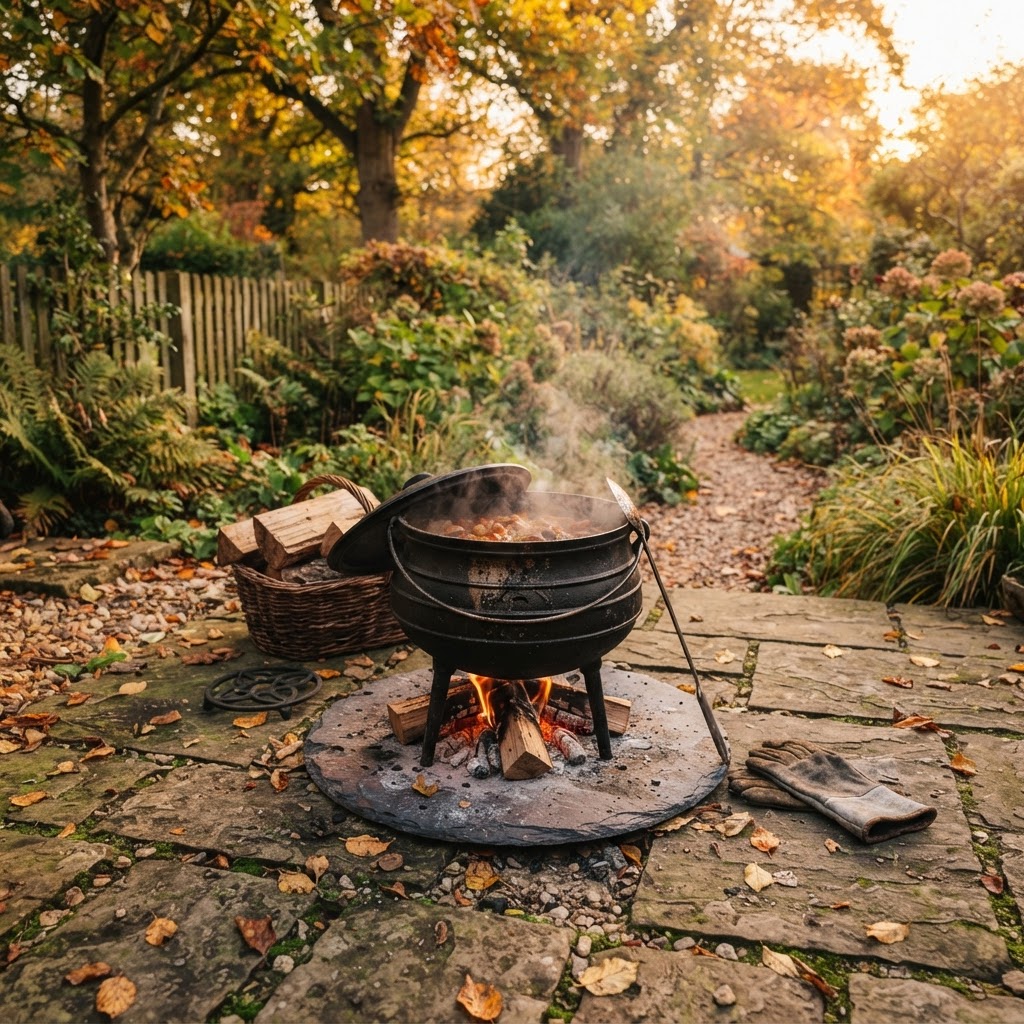
For many of us, the sight of a three-legged cast-iron pot bubbling away is the ultimate symbol of home. While the UK climate might not always cooperate with an outdoor fire, you do not have to leave your potjiekos tradition behind. Whether you are a seasoned pro or buying your first pot, you can recreate those slow-cooked flavours in your British kitchen or garden.
This guide covers the essentials of selecting and maintaining your equipment, adapting your cooking method to the local environment, and three reliable recipes to get you started. With a bit of patience and the right approach, you will be serving up a proper meal that tastes just like it came from the bushveld.
Choosing and Seasoning Your Pot
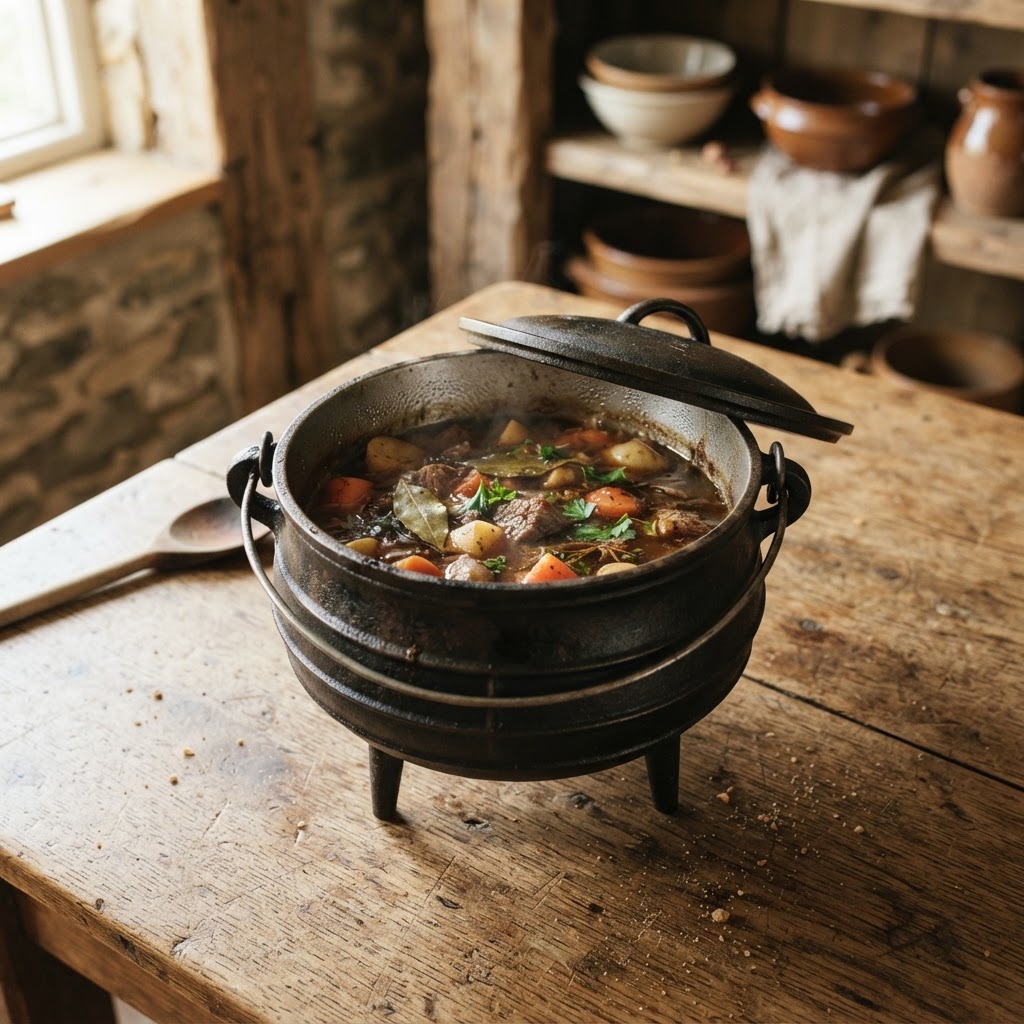
When buying a potjie in the UK, look for a traditional three-legged cast-iron pot. The three legs are essential for stability over coals, allowing for even heat distribution. If you are buying online, ensure it is genuine cast iron, not aluminium, as the weight is what allows for the slow, gentle simmering that defines the dish.
Before your first cook, you must season the pot to prevent rust and create a non-stick surface.
- Scrub the pot with hot water and a stiff brush to remove any factory coating.
- Dry it thoroughly over a low heat source.
- Rub a thin layer of cooking oil over the entire interior and exterior.
- Place it in a low-heat oven for an hour to bake the oil into the iron.
Repeat this process whenever the pot looks dry or grey. Between uses, always store your pot with a paper towel inside and the lid slightly ajar to allow air circulation, which prevents moisture buildup and rust.
Cooking in the British Climate
The biggest challenge in the UK is the weather. If you are determined to cook outdoors, invest in a sturdy fire pit or a dedicated braai stand that can handle the wind. Use high-quality charcoal or hardwood briquettes to maintain a consistent, low heat. If the rain starts, do not panic; you can easily move the process indoors.
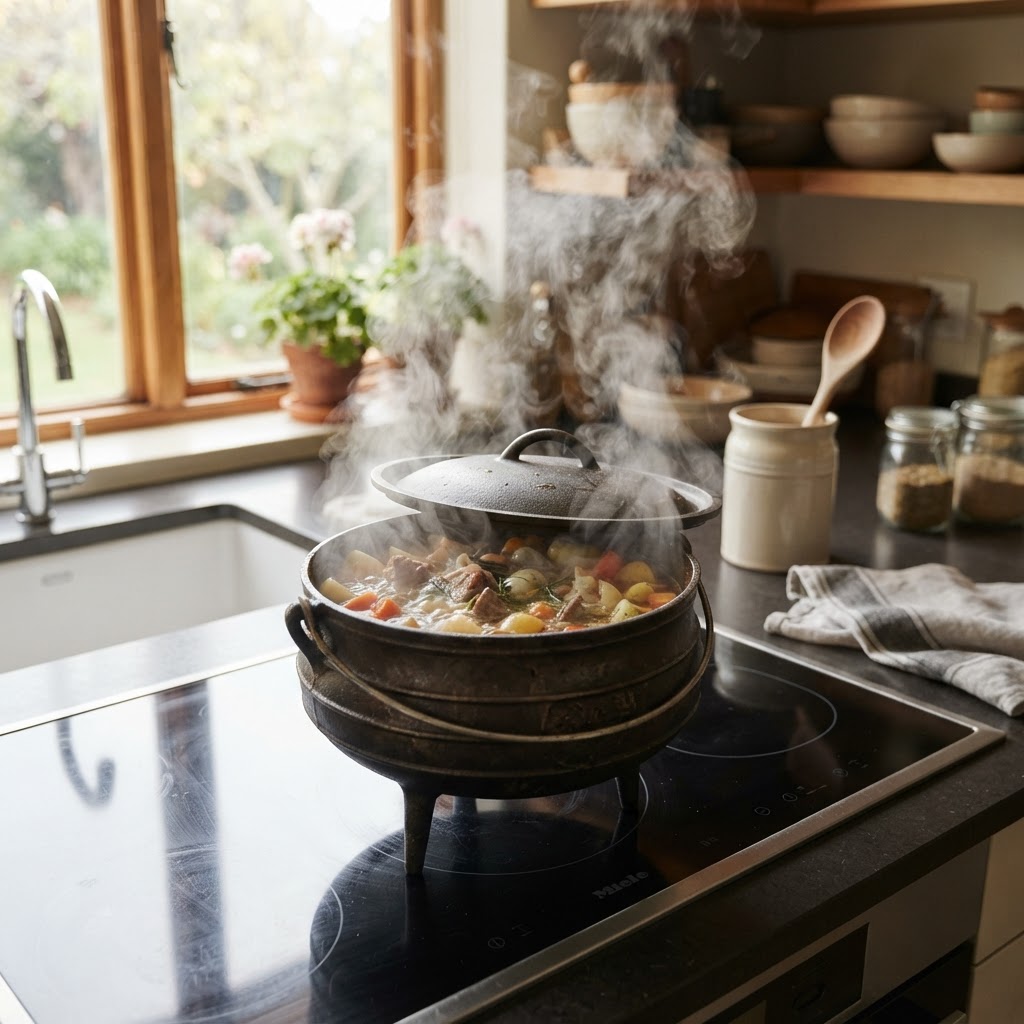
For indoor cooking, use your potjie on the hob. While you lose the smoky flavour of an open fire, the cast iron still provides the superior heat retention needed for a perfect stew. If your pot is too large for your stove, you can transfer it to a large oven at a low temperature (around 150°C) to finish the cooking process. The key is to avoid high heat; potjiekos is a slow-cooking method. Whether on coals or a stove, the goal is a gentle simmer, not a rolling boil. Keep the lid on as much as possible to trap the steam and flavours, and remember the golden rule: do not stir. Layer your ingredients from hardest to softest, and let the pot do the work.
Three Crowd-Pleasing Recipes
CLASSIC BEEF AND MUSHROOM
Brown beef cubes in oil, then add onions, garlic and leeks. Deglaze with a splash of red wine. Layer carrots, potatoes and mushrooms on top. Pour over beef stock mixed with a sachet of rich beef soup powder for a thick, hearty gravy.
TRADITIONAL CHICKEN POTJIE
Brown chicken thighs with chicken spice. Add bay leaves, thyme and a dollop of chutney. Layer with baby potatoes, carrots and mushrooms. Use chicken stock to cover the base and simmer for 80 minutes until the meat is tender.
LAMB AND VEGETABLE
Sear lamb neck or shoulder pieces. Add onions and garlic. Layer with butternut squash, cauliflower and green beans. Use a lamb stock base with a touch of rosemary. This version benefits from a longer, slower cook so the lamb falls off the bone.
Always mix your thickening agents, like cornflour or soup powder, with a little water to form a paste before adding them to the pot near the end of the cooking time. This prevents lumps and keeps the sauce smooth and rich.
Pro Tips
Manage the heat carefully
If cooking outdoors, keep a separate fire going to replenish your coals. Never add cold coals directly under the pot, as this will cause uneven cooking.
Layering is everything
Always place the meat at the bottom, followed by the vegetables that take the longest to cook. Save delicate vegetables like green beans for the final 15 minutes.
Preventing rust during storage
If you live in a damp area of the UK, keep your pot in a dry cupboard rather than a shed. A light coating of oil after every wash is the best insurance against rust.
Frequently Asked Questions
Can I use a normal heavy-based pot instead of a potjie?
Yes, you can. While a three-legged cast-iron pot is traditional, any heavy-based pot will work for the slow-cooking process. The results will be similar, though you miss the iconic aesthetic.
How do I know if my potjie is properly seasoned?
A well-seasoned pot will have a smooth, dark, non-stick surface. If food is sticking or you see patches of rust, it needs to be scrubbed and re-oiled.
Is it okay to stir the potjie while it cooks?
No, you should avoid stirring. The beauty of a potjie is the layering; stirring breaks down the vegetables and ruins the texture of the dish.
What is the best way to clean a cast-iron pot?
Use hot water and a stiff brush. Avoid using soap, as it can strip the seasoning. Dry it immediately over heat and apply a thin layer of oil before storing.
Free email · no account needed
More like this, straight to your inbox
Stories, guides and what's on for South Africans in the UK — plus every Boks, Proteas and Bafana fixture with the UK channel. Free.
Email only, unsubscribe any time. Privacy notice
Analytics
We'd like to use Google Analytics to count visits and see which pages get read. It stores an ID on your device. Say no and the site works exactly the same — nothing here affects signing in, the match-day poll or the newsletter, which don't need your permission because they only do what you asked for.
You can change this any time on our cookies and storage page.
Have your say
No account needed — say your bit and post. Disagreement welcome; abuse gets removed.
Nobody has said anything yet. Go on.